ORIGINS
A Siberian working dog
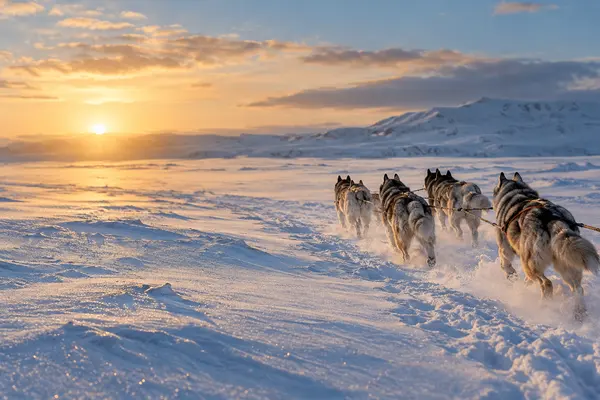
Raised by the Chukchi people as a sled dog and companion, and brought to Alaska in 1909 to race.
How old is the line? doodlehusky
THE SLED DOG, BY THE EVIDENCE
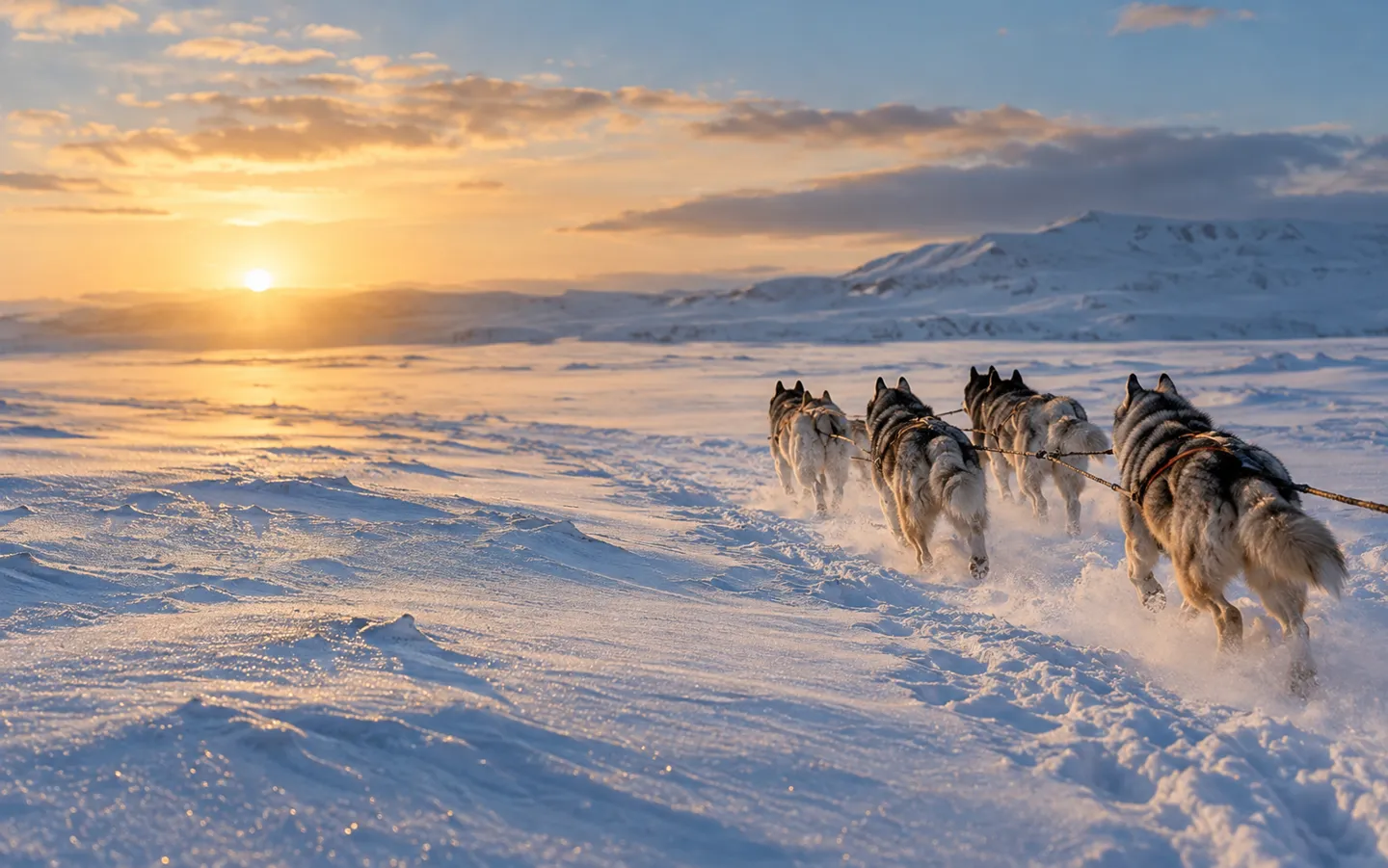
The Siberian Husky is a working dog with a very long history.
Raised by the Chukchi people of Siberia, made famous by a 1925 relay through the Alaskan winter, and descended from a sled-dog line at least 9,500 years old. Here is what the evidence says about the breed, in plain English.
Plain English, with the sources linked.
HARNESS not handbag
Try the eye checkTHE SHORT ANSWER
The breed standard sums up its job:
a light load, at moderate speed, over great distances.
ORIGINS
Raised by the Chukchi people as a sled dog and companion, and brought to Alaska in 1909 to race.
How old is the line?THOSE EYES
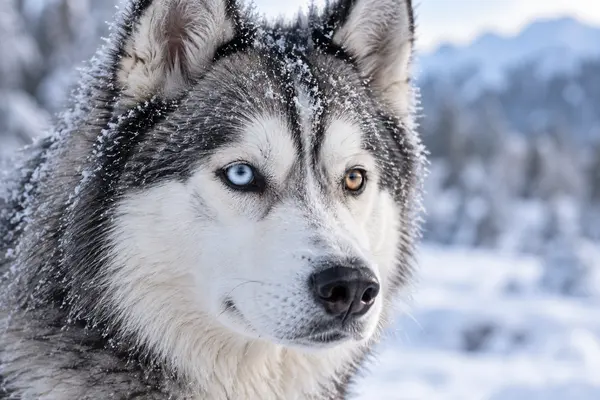
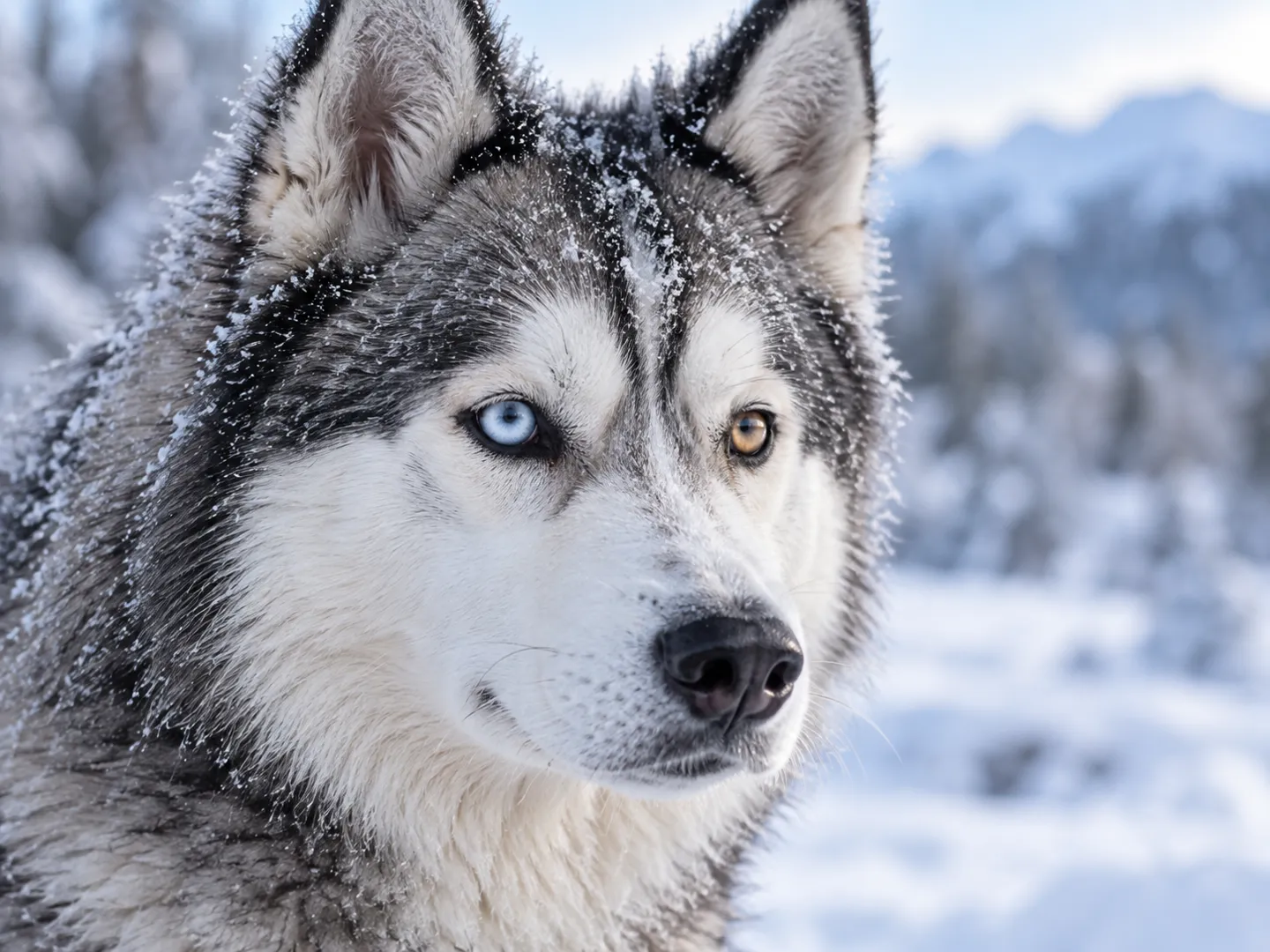
Every eye colour is accepted by the standard, and a 2018 study found the DNA change behind the blue.
Try the eye checkTHE COAT
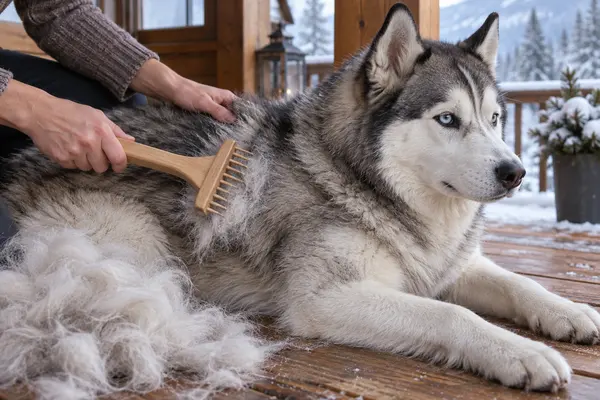
A soft, dense undercoat under a medium outer coat, which needs frequent brushing in shedding season.
Before you meet one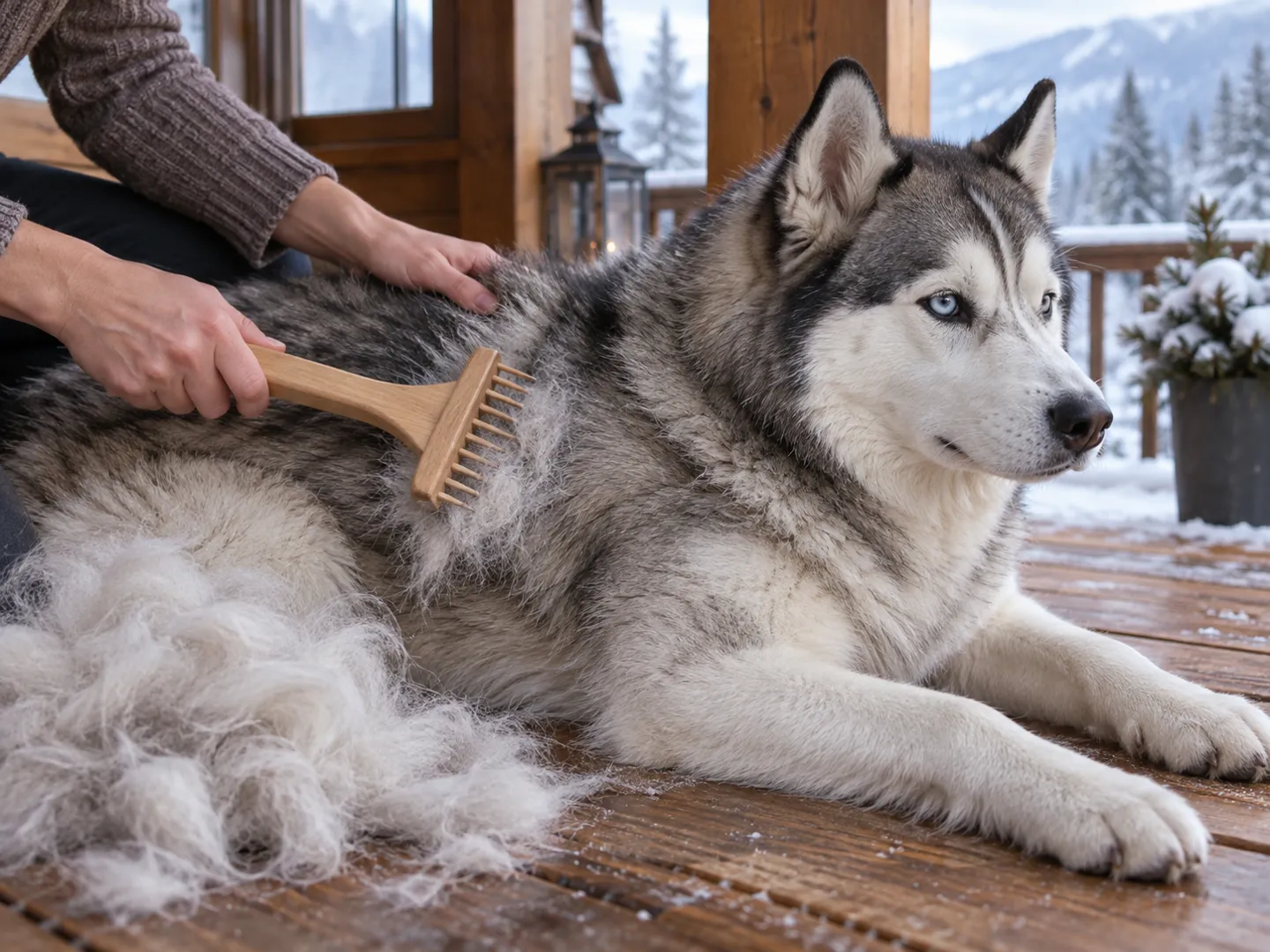
BEFORE YOU MEET ONE
The standard describes a dog that carries a light load at moderate speed over great distances. That is the job its body was shaped for.
The dense, soft coat needs frequent brushing, especially while it sheds. Expect a lot of undercoat at once.
Brown, blue, one of each and parti-coloured eyes are all accepted. Eye colour is not a mark of quality.
A grown male can weigh up to 60 pounds. Meet adult dogs, not just puppies, to see what you would live with.
TWO NUMBERS WORTH KNOWING
The sled dog is older, and hungrier,
than most people would guess.
9,500 years
Age of the sled-dog line
Researchers sequenced a 9,500-year-old dog from Zhokhov island in Siberia. Modern sled dogs share most of their genome with it. Earlier estimates put sled dogs at only 2,000 to 3,000 years old.
ANCIENT DNA · 2020
12,000 vs 2,000
Calories a racing sled dog eats a day
During a race, sled dogs eat about 12,000 calories a day, six times an average person's 2,000. Nearly 60% of a racing sled dog's diet is fat.
RACE FUEL · IDITAROD
Both point the same way: this is a body built over thousands of years for long, cold, hard work, not for short strolls.
A QUICK EYE CHECK
Pick an eye colour you have seen on a husky. The answer comes from the Siberian Husky breed standard used by the American Kennel Club, approved in 2021.
Every option gets the same answer, on purpose. Eye colour says nothing about whether a husky is a good example of the breed.
HUSKY FACTS
The breed was raised in Siberia by the Chukchi people as a sled dog and companion. It was brought to Alaska in 1909 for sled dog races.
In 1925 diphtheria antitoxin reached Nome, Alaska, through a winter relay driven by 20 mushers and more than 150 dogs. Leonhard Seppala and his lead dog Togo covered 261 miles of it.
A 2018 study of about 6,000 DNA-tested dogs linked blue eyes in Siberian Huskies to a 98.6-kb duplication near the ALX4 gene on chromosome 18.
The standard gives 45 to 60 pounds and 21 to 23.5 inches for males, and 35 to 50 pounds and 20 to 22 inches for females.
Racing sled dogs move to a glycogen-sparing metabolism, burning fat from the bloodstream instead of draining the sugar stores in their muscles.
QUICK QUESTIONS
Short answers to the questions people ask most.
The breed was raised in Siberia by the Chukchi people, who valued it as a sled dog and companion. Huskies were brought to Alaska in 1909 for sled dog races.
A 2018 study in PLOS Genetics, based on about 6,000 DNA-tested dogs, linked blue eyes in Siberian Huskies to a 98.6-kb duplication just upstream of the ALX4 gene on chromosome 18, a gene involved in eye development.
The breed standard gives 21 to 23.5 inches at the withers and 45 to 60 pounds for males, and 20 to 22 inches and 35 to 50 pounds for females. It is a medium-sized working dog, not a giant one.
In 1925, diphtheria antitoxin was carried overland to Nome, Alaska, by a relay of 20 mushers and more than 150 dogs. Leonhard Seppala and his lead dog Togo covered 261 miles of the route.
Older than once thought. A 2020 study in Science sequenced a 9,500-year-old dog from Zhokhov island in Siberia and found that modern sled dogs share most of their genome with it. Earlier estimates put sled dogs at only 2,000 to 3,000 years old.
Updated
A NAME WITH STAMINA
doodlehusky.com is part of the DoodleSale portfolio. It isn't in an auction right now, but you can ask about leasing it.